
How Arrest Warrants Work in Cedar County
An arrest warrant is a judge's command to bring someone into custody on a criminal charge. Cedar County publishes no public arrest-warrant table, no bond schedule, and no roster of which agency serves each order. The practical route runs two ways: look up public case detail in JUSTICE, then confirm the order with the issuing clerk and the sheriff. Court structure shapes the call. District Court carries the felony docket in Cedar County, while County Court handles misdemeanors, traffic, city ordinance matters, and felony preliminary hearings. Nebraska law also permits warrantless arrests, which are a separate process. So do not treat an arrest event and a public warrant entry as the same thing.
Felony Arrest Warrants and District Court
For a felony case, the Cedar District Court clerk is the first call. The office sits on the second floor at 101 S. Broadway in Hartington, and the clerk's page lists 402-254-6957. Ask for the case number, the issuing judge, warrant status, bond direction, and whether a motion or a lawyer is needed in Cedar County.
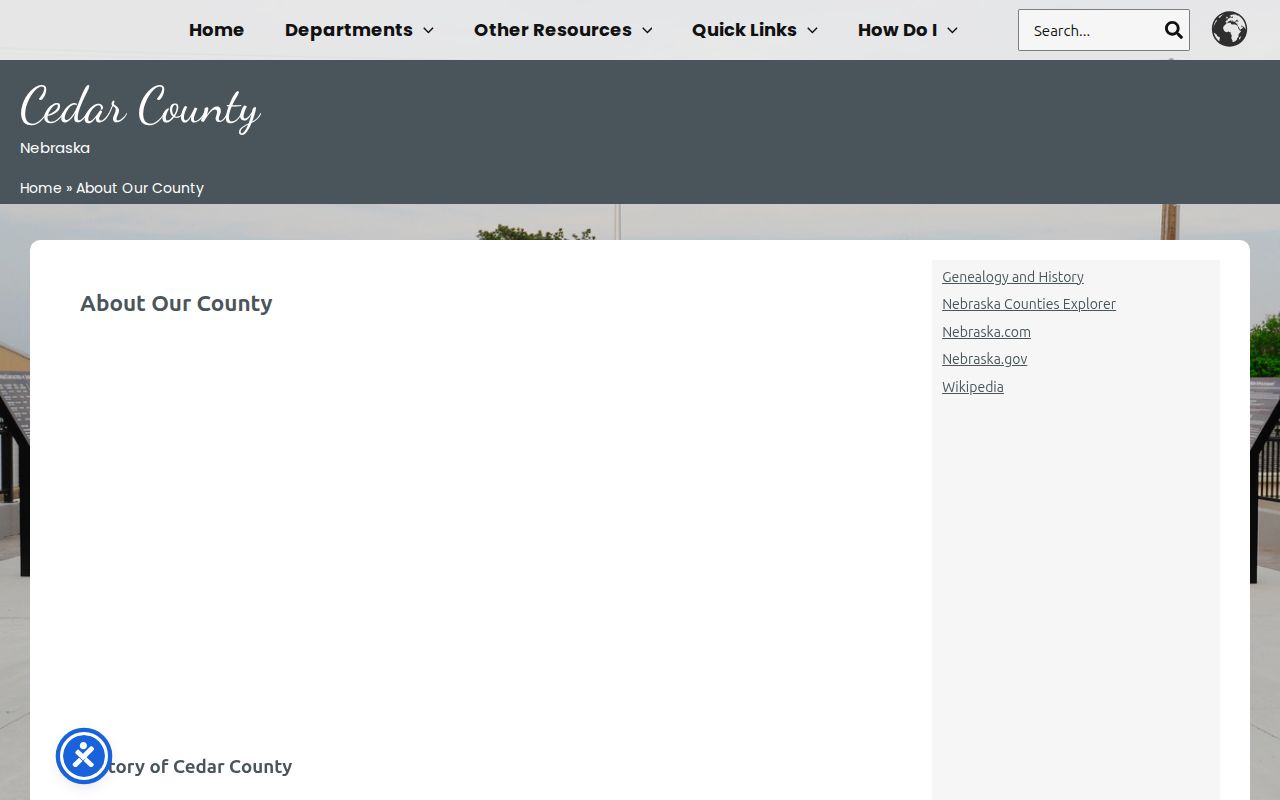
The official county history source supplies local courthouse context for the court and clerk route.
Call the office that actually holds the felony docket rather than assuming Cedar County Court can answer a District Court matter.
Complaint, Affidavit, Probable Cause
A complaint or affidavit gives the judge the facts behind a requested arrest. Probable cause just means a reasonable factual basis exists for it. Cedar County's public pages post no sample affidavit or warrant record, so ask the clerk what part of the filing is public and what has been sealed or redacted.
| Stage | What it means | Cedar route |
|---|---|---|
| Complaint | Document that begins or states a criminal case | Issuing court clerk |
| Affidavit | Sworn facts offered in support | Ask the clerk what is public |
| Probable cause | Factual basis for the court's order | Judge or magistrate decides |
| Warrant | Command directing arrest | Sheriff or local police may serve |
Arrest Warrants: What They Contain
No public Cedar County sample is posted for a field-by-field read. Treat the items above as questions for the clerk or sheriff, not as a claim each appears online. JUSTICE may show case detail, party, judge, costs, payments, docket actions, and document images uploaded after April 16, 2008.
| Case or warrant number | Use the confirmed number to distinguish the case; Cedar's public number format was not published. |
|---|---|
| Charge | Ask for the offense and classification shown in the case. |
| Issuing judge | Confirm which court entered the order. |
| Bond | Ask the court or sheriff for the current amount and type; no schedule was located. |
| Status | Ask whether the order is active, served, recalled, quashed, or subject to a hold. |
| Service agency | Ask the sheriff or city police which office is handling service. |
Cedar County Arrest Records and Context
Cedar County counted 8,380 residents in 2020 across about 740 square miles. No official arrest-warrant total, service count, clearance rate, or special warrant docket is published. Without those numbers, a county-level count should never be guessed from a statewide search or general case totals.
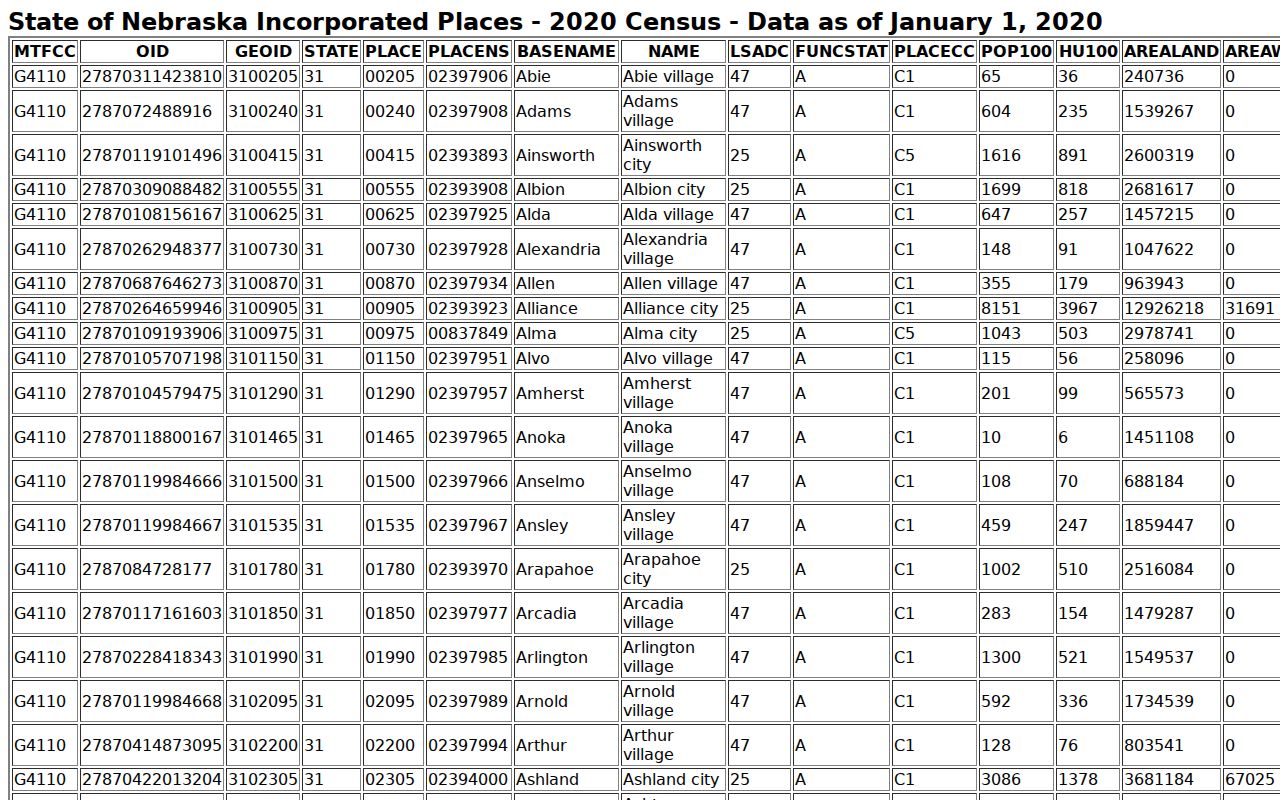
The Census-based community table helps place Hartington and the county's court geography in context, not to measure warrants.
For a current record, use the court and sheriff contacts.
How Warrants Get Served in Cedar County
The Sheriff's Office is the county's contact for law enforcement, jail responsibility, communications, and service questions. City police can execute city process and may serve a local order. Hartington's ordinance book spells out its police department's duties, and Coleridge's code allows a Cedar County Sheriff contract if village police service is set up that way. The U.S. Marshals task force is a federal or regional channel, not the ordinary county-court route. For custody, surrender, or bond routing in Cedar County, call the Sheriff's Office at 402-254-6884. The office posts weekday administrative hours but no separate warrant intake window, so confirm the local instruction before you appear.
Arrest Warrants, Summonses, and Bench Warrants
A bench warrant usually follows a missed court date, unpaid amount, contempt, or another order problem. An arrest warrant follows a complaint and probable-cause review. Either one can end in custody in Cedar County, and the clerk's answer depends on the case type and issuing court.
| Record type | Common starting event | Primary Cedar contact |
|---|---|---|
| Arrest warrant | Complaint, affidavit, probable cause | Issuing court and sheriff |
| Bench warrant | Failure to appear, pay, or comply | County or District Court clerk |
| Warrantless arrest | Reasonable-cause authority under state law | Law-enforcement agency and later court record |
Before Arrest: Ask About Bond
Before any arrest, call the issuing clerk and a defense lawyer. Ask whether the court allows a walk-through, bond arrangement, personal recognizance, a motion, or another setting. The county-linked AllPaid page can process bond information, including defendant, case, county, assignee, payment, and billing fields. Paying it does not by itself recall a Cedar County arrest warrant.
Urgent: An active arrest warrant can lead to custody. Confirm the court and sheriff instructions before taking action, and get legal advice for the case.
Keep your bond confirmation or receipt, then ask the Cedar County clerk when the docket will show the court's action.
What the Public Search Can Show
JUSTICE can show a public case, party listing, judge, court costs, payments, register of actions, and later document images. The service warns of a 24-hour entry lag and caps a name search at up to 30 matching cases. Sealed, juvenile, or investigative records may not appear at all. Treat any Cedar County search as a lead, not a final warrant answer. Nebraska's reasonable-cause arrest law shows why a public warrant record and an arrest event are not interchangeable. Ask the clerk what occurred and whether an order remains active.
Arrest Warrant Access Limits
Nebraska Public Records Statutes section 84-712 generally supports inspection and copying. Section 84-712.05 carves out exceptions for some investigative and law-enforcement material, and section 43-2,108 restricts juvenile information. A sealed or investigative file in Cedar County may be withheld or redacted.
Access point: Request a specific case from the office holding it. Cedar County's FAQ says an uncertain request can go to the County Clerk for forwarding. Do not treat a missing public result as proof that no warrant exists.
Use the County Clerk's public-record route, the issuing court, and the sheriff together.
Handling an Arrest Warrant in Your Name
Confirm the issuing court, case number, charge, and bond or release terms. Ask whether counsel must file a motion or a clerk can set a date. Family-law contempt runs through District Court forms and a judge, which differs from a traffic matter. In Cedar County, after the action, request proof of the docket entry and ask when JUSTICE may update.
- Probable cause
- A reasonable factual basis for a criminal warrant request.
- Recall
- The court withdraws the warrant.
- Bond
- A court-approved undertaking tied to future appearance.
- Serving agency
- The law-enforcement office handling execution of the order.