
How Municipal Court Warrants Work
City citations in Cedar County do not always land in a separate city court. The official County Court page lists city-ordinance violations, traffic matters, infractions, and misdemeanors among its case types. So a local ticket may carry no dedicated municipal warrant page of its own. City police or the village office can tell you which citation you actually hold. The County Court then confirms the docket, warrant status, payment, and the path to a recall. The County Court page is the central local link, and JUSTICE adds a public case layer, though it is not a full warrant roster.
Municipal Courts Across Cedar County
A citation starts in town but resolves at the courthouse. Hartington, Laurel, Randolph, Coleridge, Wynot, and other incorporated communities can run local police or village enforcement, yet the listed ordinance and traffic matters sit under county-court jurisdiction in Cedar County. Ask the city office which citation was issued. Then ask County Court about the warrant.
| City route | First local contact | County confirmation | Question |
|---|---|---|---|
| Hartington | City police or clerk | County Court | Was an ordinance or traffic warrant issued? |
| Laurel | Laurel Police or city office | County Court | What case number matches the citation? |
| Randolph | Police non-emergency line | County Court | What is the recall step? |
| Coleridge | Village office or police route | County Court | Is sheriff service involved? |
| Wynot | Available citation paperwork | County Court | Which office holds the case? |
Hartington City Police Process
Hartington's 2024 ordinance book puts its Police Department in charge of state and city law, execution of city process, and bringing arrested people before the proper court. The department posts no public warrant roster. City Hall sits at 107 West State Street. The city government page also offers a public-record request form. For the case answer, warrant status, and recall, call Cedar County Court at 402-254-7441.
The official Hartington city source gives the local government context for a citation-origin question.
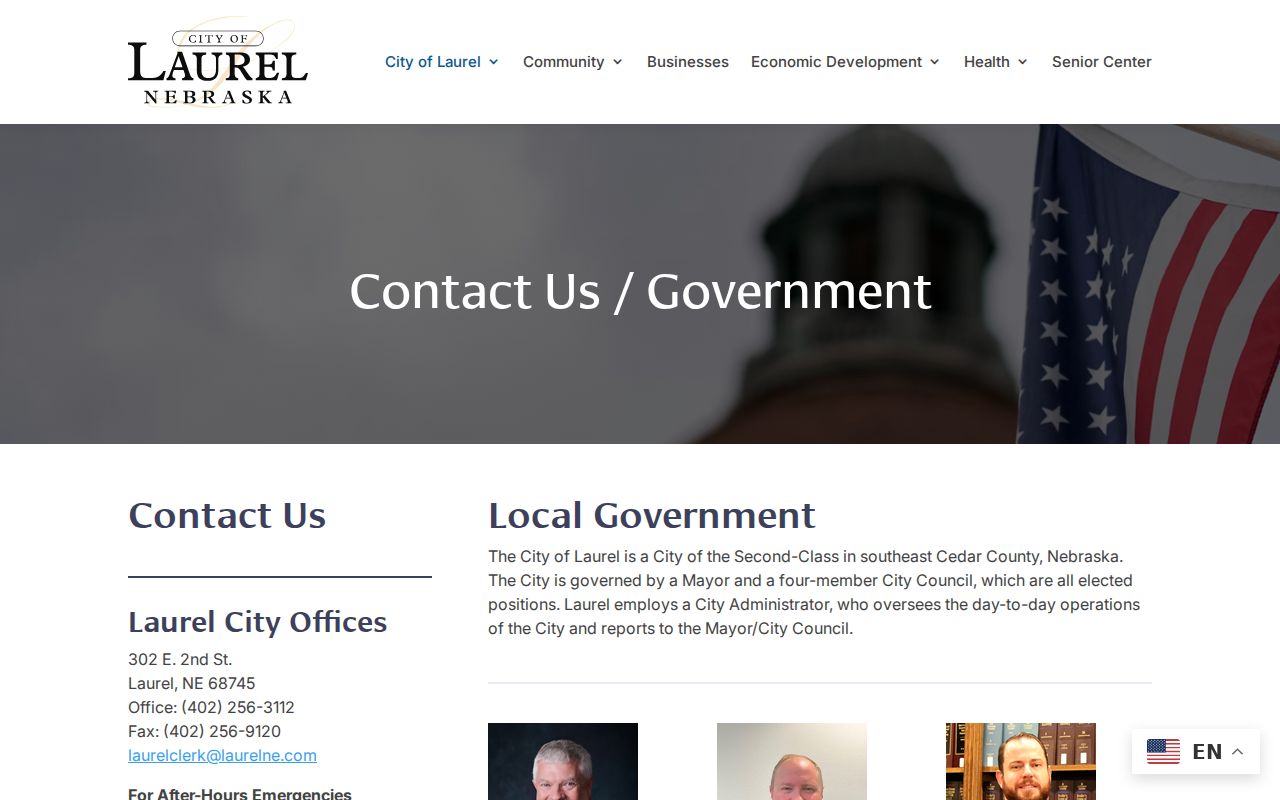
Laurel's city office offers the same county-city route. In Cedar County the pattern repeats: get the citation trail from the city, then ask the court about recall.
Types of Cedar County City Warrants
The exact label on a warrant belongs to the court. Cedar County cities do not each publish their own warrant-type menu. Treat these categories as a practical map, nothing more.
| Type | How it can arise | Confirmation route |
|---|---|---|
| Traffic warrant | Unpaid citation or missed traffic date | County Court clerk |
| Ordinance case warrant | Unresolved city-code matter | County Court clerk after city identification |
| City bench warrant | Missed court setting or noncompliance | Issuing judge and clerk |
| Arrest warrant | Criminal complaint and probable cause | County or District Court, depending on case |
Laurel's Police Citation Route
Laurel's emergency-services page lists its Police Department at 101 E. 2nd Street, with a non-emergency line at 402-256-3211, an email, and one full-time officer. The city office is separate, at 302 E. 2nd Street. Those contacts can trace where a citation began. Whether a Cedar County warrant issued, or was later recalled, is the County Court clerk's answer to give.
The Laurel Police source shows the separate police contact a resident may need before calling court.

Ask County Court before using an online payment route.
Municipal Warrants: What They Show
Cedar County exposes no municipal warrant record for public field-by-field review. A clerk can confirm which fields apply to your citation. JUSTICE may show the public case, party, court costs, payments, register of actions, and later document images. It offers no universal city-warrant card.
| Citation number | Number on the ticket or form that connects the city event to County Court. |
|---|---|
| Case number | Number the court uses for the docket and payments. |
| Issuing court | County Court for the city-ordinance and traffic route documented locally. |
| Reason | Failure to appear, failure to pay, or another order the clerk confirms. |
| Status | Ask whether active, served, recalled, quashed, or awaiting a setting. |
| Payment or bond | Ask the court for the amount and accepted method. |
Randolph Police and Court Confirmation
Randolph lists City Hall at 212 E. Broadway and a separate police non-emergency number, 402-337-0411. Tony Backer is the police chief. The city police email is published too. That split helps a resident trace a citation to its source. It does not prove a warrant was cleared. County Court at 402-254-7441 controls case status and recall for Cedar County.
The Randolph departments page shows why police and city-office contacts should be kept separate.
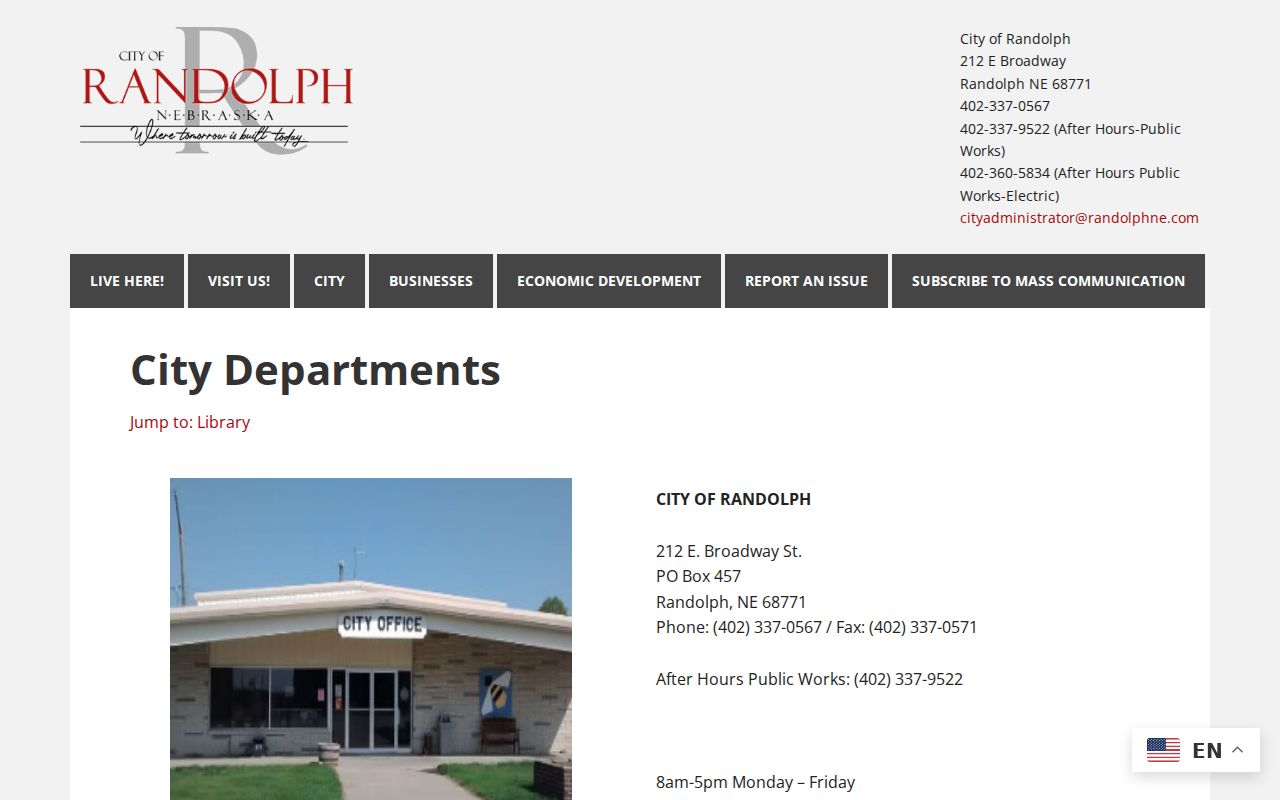
Keep both phone routes with the citation number.
Coleridge's Sheriff-Contract Question
Coleridge's code says the chief of police directs village police work, files complaints, executes process, and brings arrested people before the proper official. The code also permits a contract with the Cedar County Board for law-enforcement services. If that contract is active, sheriff or deputy staff may hold village police powers. That detail matters. Ask the village office which service path applies today.
The Coleridge village source documents the conditional law-enforcement structure.

County Court remains the documented warrant-status route for the case types at issue.
Cedar County Municipal Warrant Checks
Work in layers. Start with the city citation or police contact, search the party name in JUSTICE, call County Court, and reserve sheriff calls for service, custody, surrender, or bond. If the record is unclear, Cedar County's FAQ sends uncertain public-record requests to the County Clerk for forwarding.
- Collect the city name, citation number, name, date of birth, and court date.
- Ask the city contact to identify the case, not to declare the warrant clear.
- Use JUSTICE to find the county-court case.
- Ask County Court whether a warrant is active and what recalls it.
- Save the court's receipt or order after payment, appearance, or bond.
Where City Warrants Fit With Cedar County
The local flow is simple. City police or village process starts the case, the Cedar County Court docket carries it, the Cedar County Sheriff serves warrants when needed, and Nebraska JUSTICE provides the public case layer. Cedar County has no separate municipal portal. For the full county route, use Cedar County warrant records and the county warrant search instructions. Keep the city detail at the front of your question. That detail explains why a city website may not show a warrant at all, and why the Cedar County Court clerk gives the final answer for an ordinance or traffic case. No city page can recall a warrant. Only the issuing court can.
Public Access to City Warrant Records
Nebraska Public Records Statutes section 84-712 generally supports inspection and copying. Section 84-712.05 carves out exceptions for some law-enforcement investigative material. Juvenile records stay restricted under section 43-2,108. Ask the Cedar County city or court for a specific record, and ask the County Clerk to forward it when the holder is unclear.
Key rules: Cedar County posts no public city warrant roster. Sealed, juvenile, or investigative records may be withheld. A blank search is not a clearance.
Nebraska Public Records Statutes section 84-712 explains the public access and response framework.
Section 43-2,108 limits juvenile record access.
Use the city contact for citation identity and the County Court for warrant recall.
Clearing a Municipal Court Warrant
Ask the court what it requires: cash, a time-payment agreement, appearance, bond, or a motion. Paying does not automatically recall a traffic or ordinance warrant. Call the sheriff before you travel if surrender, custody, or bond is involved. Afterward, get a receipt or order and ask when the Cedar County docket will update.
- City ordinance
- Local rule handled through the county-court case route documented for Cedar County.
- Recall
- The issuing court withdraws the warrant.
- FTA
- Failure to appear at a required court date.
- Bond
- Release undertaking tied to future appearance.